The ocean and the mountains may seem worlds apart. Yet those who spend time in both often find the same demands, the same reflexes and sometimes the same emotions. These connections go far beyond the mountains and the sea. Mountaineering, trail running or triathlon: some sailors use these terrains to take on new challenges, enjoy the thrill of discovery and build qualities that prove invaluable offshore. Why look elsewhere for what you already experience at sea? What is there to gain from stepping outside the field you have mastered? And how do these experiences, in turn, shape their sailing? From Everest to the Alpine summits, from long crossings to races against the clock, Maxime Sorel, Aurélien Ducroz and Sébastien Simon each offer some answers in their own way.
Two terrains, one way of reading the world
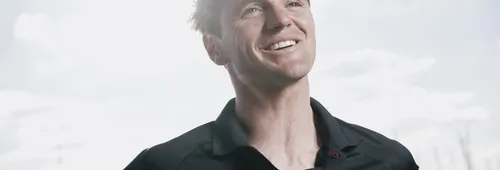
Long before skippers began heading into the mountains in greater numbers, Isabelle Autissier had already explored the links between sea and summit. She was the first woman to complete a solo round-the-world race, and later competed in the 1996-1997 Vendée Globe. Alongside mountaineer Lionel Daudet, on an expedition to South Georgia recounted in Versant Océan, she ventured onto terrain where each had to learn from the other. That experience resonates today in the journey of Aurélien Ducroz. A two-time freeride world champion before becoming a sailor, the Chamonix native long saw sailing and the mountains as separate worlds. It took his first Mini Transat, in 2011, for him to see the similarities.
« At first, I hadn’t made the connection at all between the way I moved in the mountains and the way I sailed. To me, they were two different things. Then, all of a sudden, I felt good. I felt like I was doing something I knew, something I’d mastered. The way I analysed a face or a route in the mountains was, in the end, pretty much the same thing. »
Sébastien Josse played a part in that realisation. A three-time Vendée Globe competitor, he is now sports director of Team Banque Populaire. While Aurélien Ducroz was still learning the basics of sailing, Sébastien Josse suggested he read a nautical chart the way he would approach a ski descent: identify the obstacles, spot the passages, weigh up the risks, choose where to push and where to hold back. « Ultimately, your job is to spend your time analysing the elements, then putting that analysis into perspective with your abilities, how you’re feeling, the state of your boat. Because there are days when you’re more capable than others. Then you add all that data together to make your decisions. »
This philosophy now runs through Ocean Summits, Aurélien Ducroz’s project combining preparation for the 2028 Vendée Globe with climbing the 82 Alpine peaks over 4,000 metres. The two ambitions feed off each other, far beyond sporting performance. « Without the mountains, I could never have sailed. And without sailing, I might have been a worse mountaineer. »