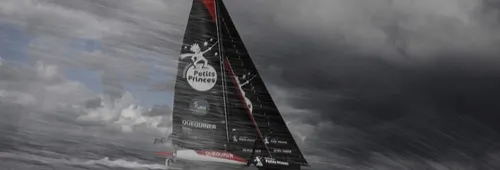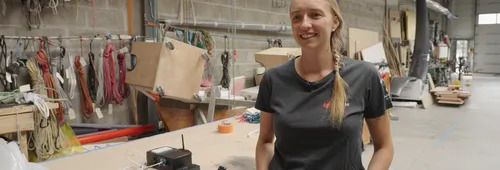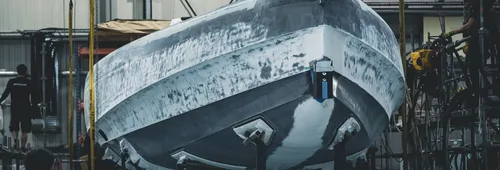

The 13th edition of the Route du Rhum - Destination Guadeloupe, the 3,250 nautical mile ocean sprint from Saint-Malo to Pointe-à-Pitre in Guadeloupe, attracted 22 IMOCA skippers to compete on what is always the biggest and most closely observed solo ocean race taking place in the year following the Vendée Globe finish. Compared with the 2018 and 2022 fleet sizes of 20 and 38 skippers, this is slightly down but reflects in part the number of new boats still in build and a number of skippers struggling to find funding at this time of the quadrennial. But of the 22 skippers lining up, eight are new programmes this year and six were rookies who had never competed on the Route du Rhum before.
Not usually like this
Whilst historically the transatlantic course to the French Antilles usually means breaking through one or two big Autumn low-pressure systems on the Bay of Biscay – and the strategic choice to go west or south – before fast sailing in the trade winds, this edition proved very atypical. The first few days were relatively benign and the lack of any trade winds meant the whole fleet went north of west to start with to find a northerly breeze. But this time the malicious depressions lay in wait further down the course, with a nasty tropical storm stuck north of Guadeloupe as a difficult barrier.
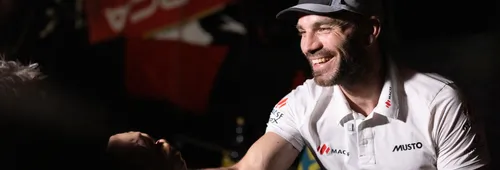
Taking the simplest, most direct passage through an initial front on the second full day of racing saw Corentin Horeau (MACSF) make a break into a narrow, fast southbound lane of strong breeze. He streaked away to a lead of over 250 miles to win the IMOCA class by the biggest margin ever – on a course which has historically been won by between two and eight hours, he won by 26 hours and 56 minutes. In so doing, Horeau, on his first big solo Transatlantic race ever, set a new course record of 9 days 17 hours 12 minutes, racing the IMOCA which took second place on the last Vendée Globe as Arkéa Paprec.